Holiday in a nature house in Austria – experience wood, straw, and clay tangibly
First-time visitors to a natural house made of wood, straw, and clay often sense at the door that something is different here. The air feels softer. The rooms sound quieter. The walls feel warm and alive. This is precisely the special charm of a holiday in a natural house in Austria: not as an original accommodation idea, but as a conscious decision for peace, security, and a different pace.
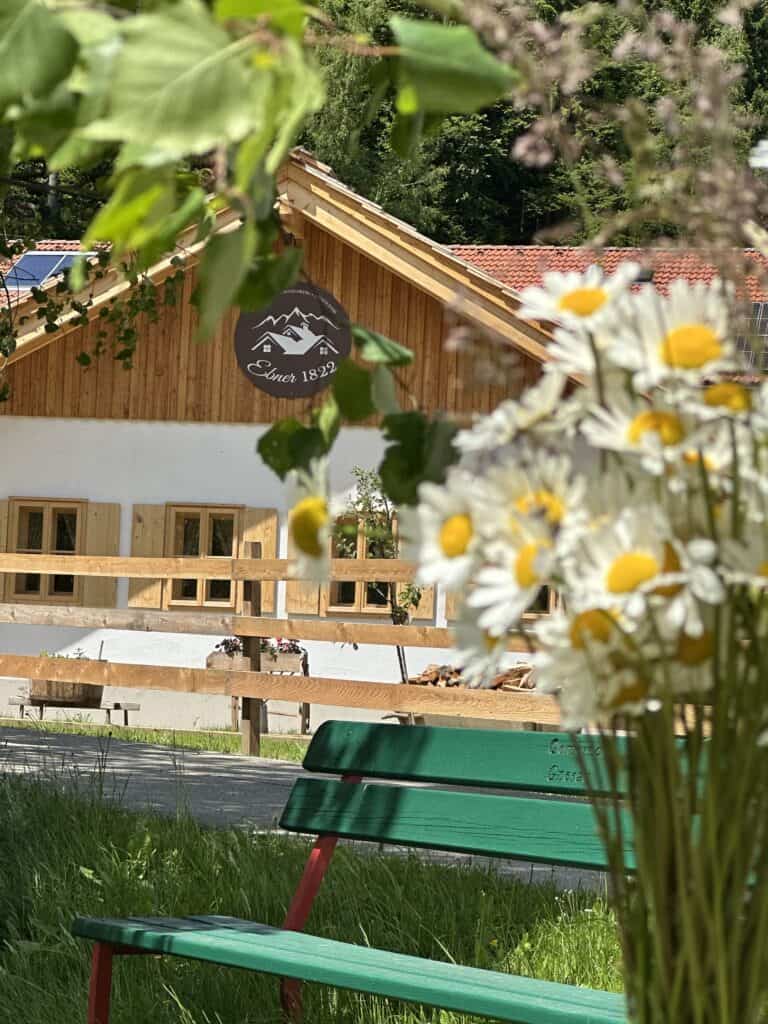
At Ebner 1822 in Carinthia, this idea is pursued with particular consistency. Three handmade holiday homes made of wood, straw, and clay stand here in a sunny spot in southern Austria – embedded in meadows, forest, a natural pond, and farm culture. They are houses for people who no longer seek a programme, but space. For couples who want to withdraw. For guests who appreciate natural materials, honest hospitality, and quiet comfort.
Such houses are often also called straw houses. However, at Ebner 1822, it's about far more than just a building material. It's about the interplay of wood, straw, clay, craftsmanship, indoor climate and peace.
Why a holiday in a nature house is so special
Many accommodations advertise their connection to nature. But there's a noticeable difference between an ordinary holiday home and a carefully constructed natural house. Wood, straw, and clay don't just create a backdrop; they create an atmosphere that you can feel physically. The rooms feel warm, balanced, and protective. Sounds recede. Everyday life loses its harshness.
With Ebner 1822 The houses were built using natural materials – with wood from their own forests, clay for the walls, and straw for insulation. This creates an atmosphere that isn't just described, but experienced. It's a quiet luxury that has nothing to do with excess. It's not the larger buffet, the next spa zone, or an overloaded leisure programme that makes for relaxation here. Rather, it’s privacy, quality materials, a fire in the stove, a bathtub with a view of nature, and a private infrared cabin in each house – for beneficial warmth and relaxation after a day spent outdoors.
Austria offers ideal conditions for this. Mountains, lakes, forests and rural cultural landscapes are close together. Especially in Carinthia, it shows how well close-to-nature living, southern light and enjoyable holidays go together. At Ebner 1822, this becomes a retreat that doesn't need to be loud to have a lasting effect.
Who a nature house holiday is suitable for
A holiday in a nature house doesn't suit everyone's requirements – and that's precisely its strength. Those looking for children's entertainment, a hotel bar until midnight, or constant activities will probably not find what they're looking for here. However, those seeking peace, quality, and a special atmosphere will immediately feel the difference.
A stay in the Naturhaus is particularly harmonious for couples, for consciously travelling individuals, for gourmets with a sense for regional cuisine, and for all who seek less distraction rather than more stimuli on holiday. Best Agers, who prefer to experience quality in atmosphere rather than show, will also find something here that has become rare in many upscale accommodations: authenticity.
A good day at Ebner 1822 doesn't have to be full. A breakfast basket in your own home. Coffee by the window. A walk with a view of the Carinthian landscape. Reading by the pond. An evening in the Village pub. Often, that's all it takes for a holiday to feel luxurious.
What distinguishes a good natural house from mere sustainability romanticism
Not every house made with natural materials lives up to what the idea promises. Particularly in the upmarket segment, it quickly becomes apparent whether a concept is merely well-presented or actually well-built. A convincing natural house requires craftsmanship, architectural clarity and furnishings that do not cover up the natural character, but rather enhance it.
At Ebner 1822, much was crafted by hand. Wood, straw, and clay are not decorative elements here, but the foundation of the house. The rooms appear neither rustic nor artificially simplified, but natural. Oak floorboards, clay walls, wooden beam ceilings, box-frame windows, a wood-burning stove, a freestanding bathtub, a private infrared cabin in each house, and high-quality furnishings combine for a living experience that is calm, warm and premium.
The hospitality of the hosts also plays an important role. A holiday in a nature house feels harmonious when the accommodation, surroundings, and guest culture speak the same language. Personal closeness is welcome, but without being intrusive. Enjoyment can be important, but without being ostentatious. Exclusivity is created not by loudness, but by care.
The situation is a deciding factor
A natural home draws its life not just from its interior, but also from its surroundings. Between a road, a densely built holiday park, and a hectic environment, even the most beautiful house made of wood, straw, and clay loses some of its impact. Therefore, it's worth paying attention not only to pictures of the house when making a choice, but to the overall feeling of the location.
Is there true tranquility? Is there spaciousness? Does the landscape suit the architecture? How close are trees, meadows, views, and water? And how much bustle is noticeable all around?
Even small, family-run places have a big advantage here. Where there are only a few houses, a different atmosphere develops. Level of privacy. One hears less, sees less, compares less. The stay becomes more personal and free.
At Ebner 1822, there are only three holiday homes on the farm. No complex. No resort. No constant coming and going. Instead, a natural pond, meadows, old farm history, the village inn, places to read, walk and find quiet. In Carinthia, on a sunny spot in Southern Austria, this creates a holiday that doesn't need to be "played" or overly structured.
What the stay feels like – mornings, afternoons, evenings
The true value of a natural house is rarely seen in individual features. It reveals itself over the course of the day.
Mornings begin quietly. Not in the dining room, not between the buffet and the clock, but at your own pace. The breakfast basket arrives at your door. Coffee is brewing. Dew lies on the meadows outside. Perhaps you'll hear the chickens, perhaps the wind, perhaps simply nothing.
At midday, it's often the freedom of having nothing you *have* to do. A little hike. A trip to the Nockberge mountains. A nearby swimming lake. A book on the terrace. Or just a slow afternoon by the pond. A nature house doesn't demand a schedule. It also accommodates those hours in which seemingly nothing happens – and it is precisely from this that rest arises.
In the evenings, you can truly feel how beneficial simplicity can be. No hustle and bustle in the hallway, no noise from the next room, no artificial holiday feeling. Instead, there's wood under your hands, warm light, a glass of wine, a fire in the stove, or soothing warmth in your own infrared cabin. Afterwards, perhaps an evening at the village inn. There, Barbara cooks with a feel for origin, simplicity, and taste. Regional cuisine is not sold here as a concept, but lived.
What guests should look out for when booking
Anyone planning a holiday in a nature house in Austria should take a closer look than they would with an ordinary holiday accommodation. The term sounds pleasant, but it says little about the actual quality. Construction, location, privacy, and atmosphere are important.
Is the house genuinely built from natural materials? Or is it merely designed to evoke them? Are there multiple units clustered closely together, or is there genuine seclusion? Is sustainability lived as an ethos or just used as a marketing gimmick? And does the culinary offering complement the location?
Especially during a peaceful stay, it makes a difference whether good food is part of the experience. Breakfast at the accommodation, regional products, fresh eggs, a small village inn, good wines, and honest hospitality often shape the character of a holiday more strongly than grand promises.
At Ebner 1822, all of this comes together: natural houses, a special place, hosts with history, a small village inn, and plenty of room for slow days.
Less supply, more impact
Perhaps that is precisely why a holiday in a nature house resonates for so long. It impresses not with loudness, but with coherence. It takes seriously those who long for retreat, for beautiful materials, for honest hospitality, and for an environment that doesn't constantly need to be entertaining.
Holidays can be many things these days: active, luxurious, sociable, spontaneous. But sometimes the most valuable thing is a place that doesn't pretend to be anything and is all the more touching for it.
When the house feels warm, the landscape vast, the food honest and the days begin to slow down again, then you have arrived. Not just in Austria. But also a little bit within yourself.
Ebner 1822 is a place for precisely this arrival – three handmade natural houses made of wood, straw, and clay in Carinthia, created for peace, nature, and holidays for couples. Each house has its own infrared cabin, a freestanding bathtub, a fireplace, and plenty of space for relaxing days in Southern Austria.